Mon-Sat: 10:00 AM - 7:00 PMMon-Sat 10AM-7PM Agency Income ForecastIncome Forecast Aadhaar-PAN Link StatusAadhaar-PAN

Why Life Insurance

What Is Life Insurance?

Life insurance gives financial support for risks linked to human life, such as death or disability caused by illness or an accident. Some long-term plans may also help with retirement needs. If a person dies or cannot work, for a short time or permanently, the household may lose income.

A person's life cannot be given a price. But a family can estimate how much income it may lose in the years ahead and choose an amount of cover. This amount is called the Sum Assured, the benefit the insurer agrees to pay under the policy. Depending on the plan and any added benefits, money may be paid if the insured person dies during the policy term or becomes disabled in an accident. Some plans may also pay a benefit at maturity or provide retirement income, so check the policy details.

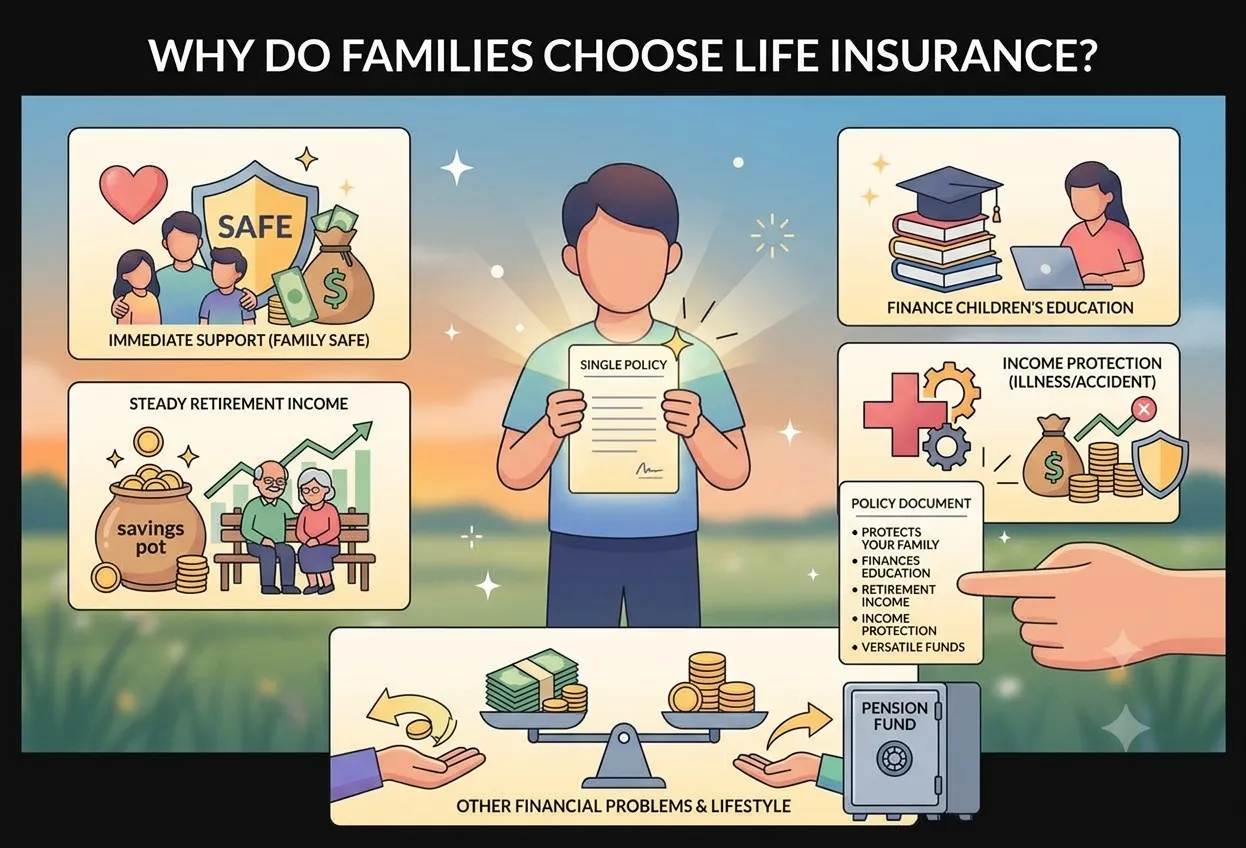
Illustration of a family protected by life insurance

Why Do Families Choose Life Insurance?

A policy may help your family pay for important needs, such as:

  • To make sure your immediate family has some money to support them after you pass away
  • To finance your children's schooling and other needs
  • To build a savings plan for the future so you can receive a steady source of income after retirement
  • To help provide some extra income if a serious illness or accident lowers your earnings for a time
  • To prepare for other financial problems and your lifestyle requirements
Infographic showing family support, education, retirement income, income protection, and other needs covered by life insurance

Who May Need Life Insurance?

Think about life insurance if someone depends on your income or the work you do at home. A homemaker's work also supports the family, even when it does not bring in a salary.

How Much Cover Might You Need?

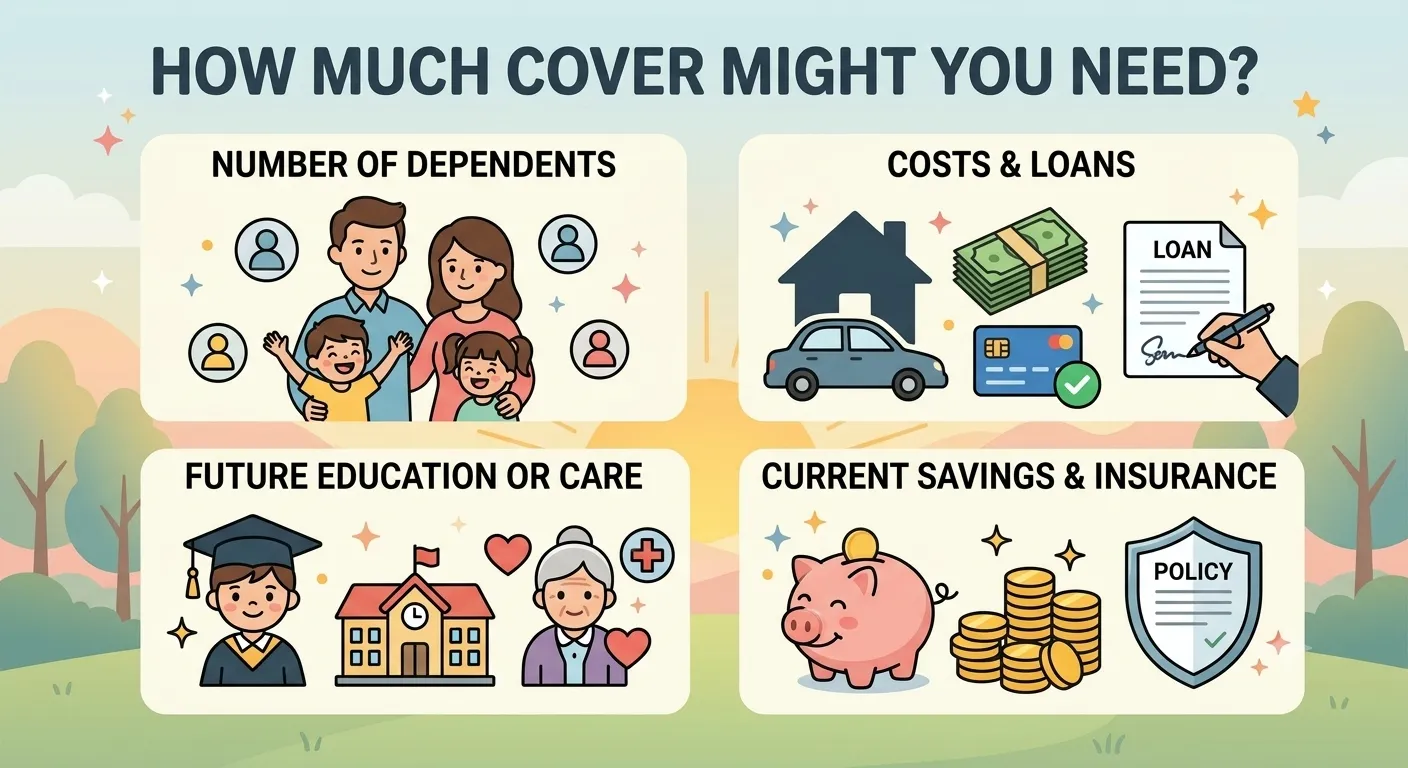
There is no single amount that suits everyone. Think about your family's needs, your income, and any cover or savings you already have.

  • How many people depend on you?
  • What costs or loans would your family need to pay?
  • What could future education or care cost?
  • What savings or insurance do you already have?
Factors to consider when choosing life insurance cover

Cover and Savings

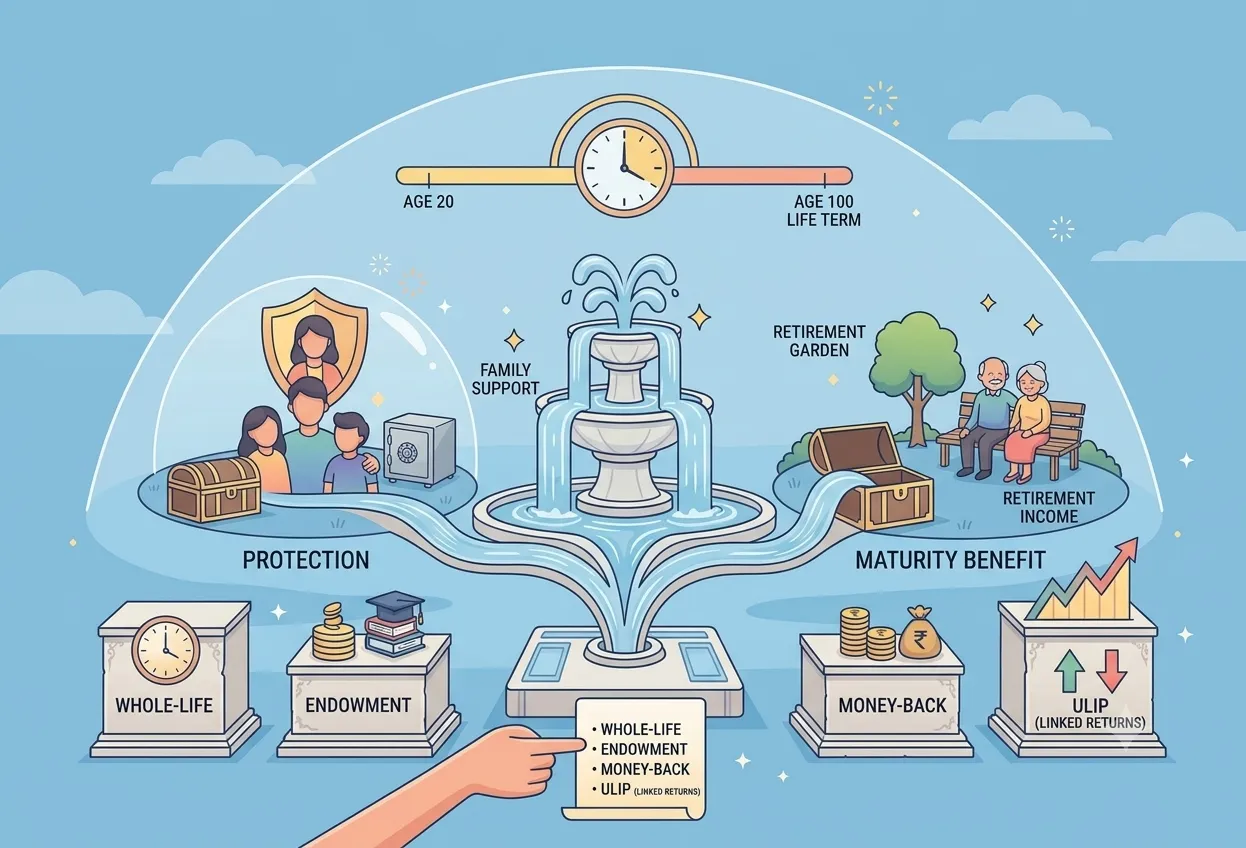
Some life insurance plans provide protection and help you save regularly. Whole-life, unit-linked (ULIP), endowment, and money-back plans can combine life cover and savings, but each works differently. ULIP returns are linked to investments and can rise or fall.

In a whole-life plan, cover may continue for life or until the age stated in the policy, sometimes 100. If the policy reaches its maturity date, it may pay a maturity benefit. If the insured person dies while covered, the named beneficiaries may receive a death benefit. Some whole-life plans also build cash value over time. Check the policy for costs, risks, payment terms, and exact benefits.

Infographic showing life cover, savings, maturity benefits, and possible retirement income

Support for Your Family

A policy payment may help your family manage expenses and keep important plans on track after a loss. It cannot replace a person, but it can provide financial support.

If the insured person dies while the cover is active, the insurer may pay the benefit to the named beneficiary under the policy rules. This money could help with household bills, loan payments, school costs, or other urgent needs. Keep beneficiary details up to date and let your family know where the policy documents are kept.

Tax Rules

Life insurance may help with tax planning. Under current rules, eligible premiums may qualify for a deduction of up to ₹1.5 lakh a year. Maturity payments from many policies may also be tax-free, depending on the plan and the rules that apply. Check the latest tax guidance for your policy.

Money in an Emergency

Some plans allow you to borrow against the policy once certain conditions are met. Not all plans include this option. A loan may lower future benefits, so read your policy terms before borrowing.

Planning for Retirement

Some insurance or pension plans can provide income in retirement. The amount and payment rules depend on the plan. Review the costs, risks, and benefits before you decide.

Illustration of a retiree reviewing savings and retirement income

Common Types of Plans

Plans work in different ways. Common types include:

  • Term insurance: life cover for a set time. It may not pay if you live beyond that time.
  • Traditional plans: combine cover and savings under the policy rules.
  • Pension plans: help provide income in retirement.
  • Unit-linked plans (ULIPs): combine life cover with investments that can rise in value.
Illustration showing term, traditional, pension, and unit-linked insurance plans

Explore a Savings Calculator

See how regular savings may grow over time. The result is an estimate, not a promise or a personal recommendation.

Open the Calculator

Explore More

Chat on WhatsApp